Hechos Humanos and Architecture
Four things that are already true, that nobody chose, and that every building either answers or ignores. On a word from Carlos Raúl Villanueva that translators keep getting wrong.
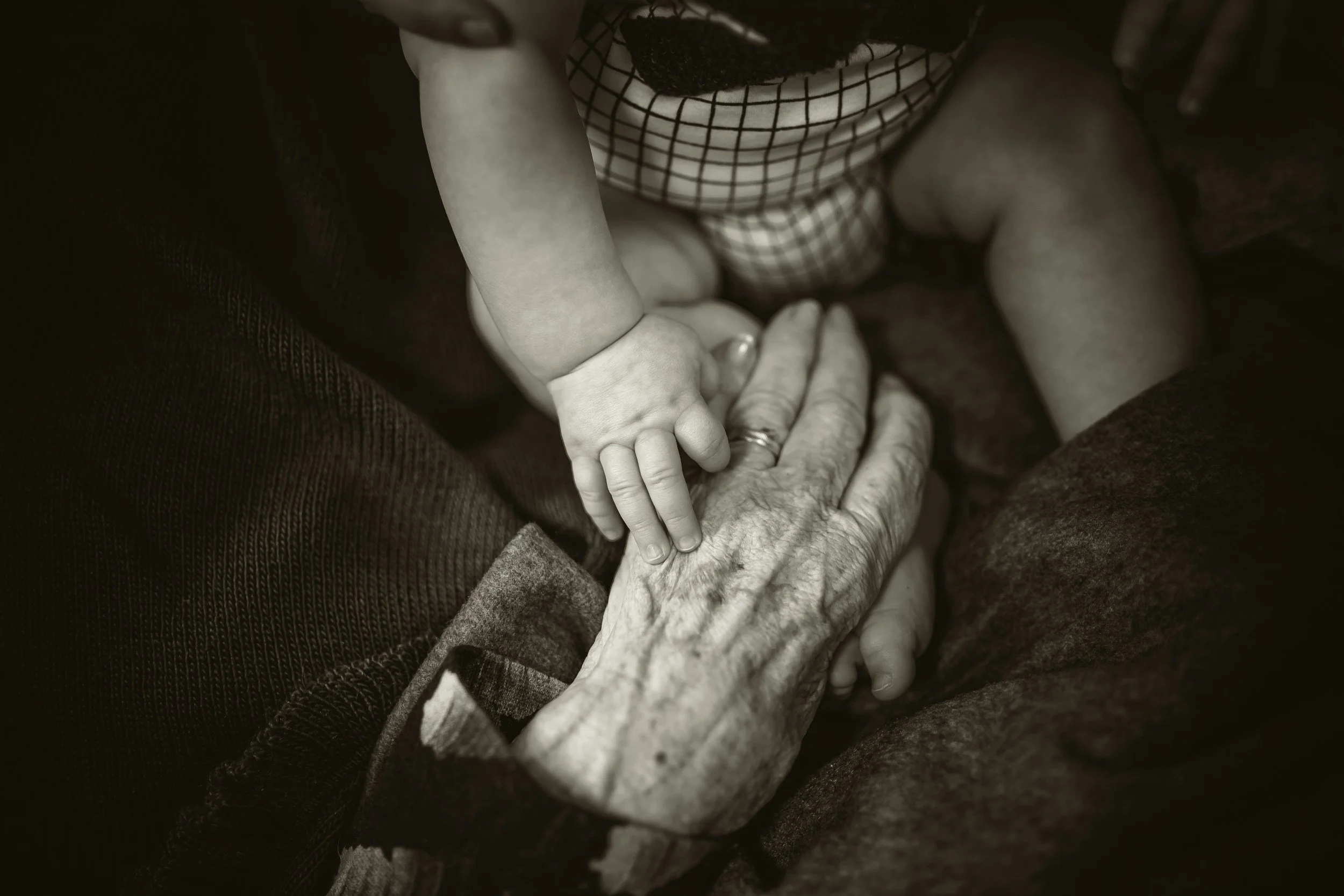
She is fifty-two and she is an only child.
Her father is eighty-six and her mother is eighty-four, and in the last year both of them have started needing things at unpredictable hours. She works. She is good at her work. There is nobody to share the rota with, because there is no rota, because there is no one else.
In her mother’s generation that load would have been divided among four siblings. Unevenly, and mostly onto the daughters, which was its own injustice. But divided.
Now it divides by one.
Nobody chose this. No policy produced it, no generation voted for it, and there is no villain in it anywhere. It is simply the case, and it will be more the case every year for the rest of her working life.
That is what I mean by a human fact.
The word
Carlos Raúl Villanueva built the university where I studied architecture, in Caracas. In 1967 he wrote that architecture is a social act above all, that form is not the most important thing, and that its principal mission is to resolver hechos humanos.
Almost every English version renders that as “human needs.” It is wrong, and the mistake is not small.
A need is something a person has. It can be met, accommodated, or, if the budget is tight, deferred to phase two. A hecho is a fact. It is the case whether or not anyone accommodated it, and it goes on being the case in the completed building for the next sixty years.
And Villanueva’s verb is resolver. You resolve a structural load. You resolve a drainage problem. It is not a gentle word and he did not pick it by accident.
I learned that doctrine inside his campus and then from a professor of mine who made me put on armour before we walked into thirteen hospitals. It has taken me twenty-five years to work out what to do with it.
Here is what I think it asks. Before a building is designed, someone has to write down the facts it will have to resolve. Not the aspirations. The facts. So it is worth being disciplined about which is which.
Four qualify. Three of them are problems. The fourth is the material.
The first fact: there are fewer of us to carry it
Start with the one nobody expects an architect to raise.
The EU fertility rate was 1.34 live births per woman in 2024, a record low. That is not a projection or a scenario. It is a count of children who were born.
Everybody reads that as a story about the future: pensions, growth, labour supply, all the arguments you have heard. I read it as a story about a corridor.
Because the care that Europe currently runs on is not paid for and does not appear in any budget. It is performed by family members, disproportionately daughters and daughters-in-law, and the entire arrangement quietly assumes there are several of them per older person.
That assumption is expiring. Not in 2060, when the demographers say the population peaks, but now, in the generation currently aged fifty, who are the first to arrive at their parents’ old age as only children in significant numbers.
So the question is not who will pay for care. It is: when the family can no longer absorb it, where does it physically happen, and how far is that place from the rest of a person’s day.
That is a spatial question. It has always been a spatial question. We have been able to avoid noticing because someone’s daughter was absorbing it.
The second fact: the years arrive anyway
The second is the one I am known for, so I will be brief.
People are living longer, which is the great achievement of the last century and is discussed almost exclusively as a problem. The years arrive whether or not anything is ready for them. They arrive in bodies with changed hearing, changed sight, changed balance, changed attention.
The fact is not “an ageing population,” which is a phrase so worn it has stopped meaning anything. The fact is narrower and harder: the same building will be used by an eight-year-old, a thirty-eight-year-old and an eighty-eight-year-old, often in the same hour, and it was almost certainly briefed as though only one of them existed.
The third fact: the rooms are getting hotter
Climate is enormous, and most of it is not mine to speak about. One part of it is squarely a building professional’s problem, and it is the part that reaches the people I work for.
Heat kills quietly, indoors, and mostly the old. A study in Nature Medicine estimated 62,775 heat-related deaths in Europe in 2024, with people over seventy-five carrying a disproportionate share. Research published in Age and Ageing has gone further and asked which care homes in England would benefit most from heat adaptation, which tells you the profession has begun to accept that this is now a property of buildings and not of weather.
An older body regulates temperature differently. A care setting designed for the summers of 1995 is not neutral in the summers we are having. That is not a forecast. It is a specification error that is already producing deaths, in buildings that all passed their inspections.
The fourth fact: the rooms are standing empty
And now the one that changes the mood.
The average European office vacancy rate was 9.0% in early 2025, against 5.7% before the pandemic. That is a lot of floor space. Heated, serviced, structurally sound, sitting in places people can already reach.
You could read that as a market problem and wait for it to correct. I would not. Office conversions have gone from around 8% of office transactions historically to more than 30% in the first months of 2025. The industry has already stopped treating this as a blip. It is behaving as though the stock is wrong, which is a different thing from the market being down.
And the people are not staying away because they dislike desks. Where they do come in, it is mostly for each other. We built enormous quantities of space for a kind of work that no longer needs to happen there, at exactly the moment we discovered that what does need to happen there is other people.
Which is the part I cannot stop thinking about.
The first three facts describe a demand. Fewer hands, more years, and a building stock that is becoming dangerous in summer. The fourth describes a supply: buildings that already exist, already carry their carbon, and are sitting half-used near where people live.
Nobody arranged for those to arrive at the same time. They did anyway.
That is not a reason for optimism about the outcome. Converting a building is difficult, expensive and often refused. It is a reason to stop describing the problem as though there were nowhere to put the answer.

What you do with a fact
Here is the whole method, and it is unglamorous.
A fact does not ask you to feel about it. It asks to appear in the brief, at the stage where somebody is still writing down what the building must do, before the floor plates and the servicing and the access control are frozen. Every planning system in Europe has a name for that stage. Almost all of them skip it.
We already do this for facts we take seriously. Fire is a human fact and it appears in the brief. Wheelchairs are a human fact and they appear in the brief. Nobody argues about it any more, and nobody runs a two-year pilot to establish whether stairs should be escapable.
Fewer children. More years. Hotter rooms. Empty rooms. Those are on the same footing, and they are still being treated as topics.
There is a version of this argument that ends in policy and a version that ends in design, and each of them fails alone.
A policy written without knowing what a room can do produces entitlements nobody can physically deliver. A building designed without the policy produces a shared space no operator is licensed to use. I have seen both, and the second is the more expensive mistake.
The environmental psychologists and the neuroarchitecture researchers have spent years establishing that space is a health matter and not a matter of taste. Parts of that literature are thinner than the brochures quoting it, and I am careful with it. The part that holds is enough: what a building does to a person is a health outcome, and it is settled by people who were not thinking about health at the moment they settled it.
So policy and space have to move together, and the brief is the only document where they meet. It is written after the policy and before the drawing.
That is the leverage point. That is why it being skipped matters more than anything else I could tell you here.
Villanueva chose resolver because he was not describing a mood a profession should be in. He was describing a job. It is still the job, and most of it is done before anyone draws a line.
If you are sitting on a vacant floor, a care licence, or a brief that is about to go out without these four facts in it, I would like to hear about it. You can write to me. I answer.
This is part one. Part two, ddress for Liability, is about who is left to do the resolving.
Sources. EU fertility rate of 1.34 live births per woman in 2024: Eurostat. Estimated 62,775 heat-related deaths in Europe in 2024: Janoš, Quijal-Zamorano et al., Nature Medicine, 2025. Heat adaptation in English care homes: Age and Ageing. European office vacancy and conversion rates: AEW, June 2025.