Every Ramp Added at the End Is a Bad Ramp
An architect on digital accessibility, hybrid work, and capacities that change across a sixty-year career. Written after being quoted in Lattice’s guide to digital accessibility.
You can always tell.
A ramp that was in the drawing from the beginning disappears. It is simply how you arrive — a slope you do not notice taking, a door at the top of it, and no one has been asked to think about their own body on the way in.
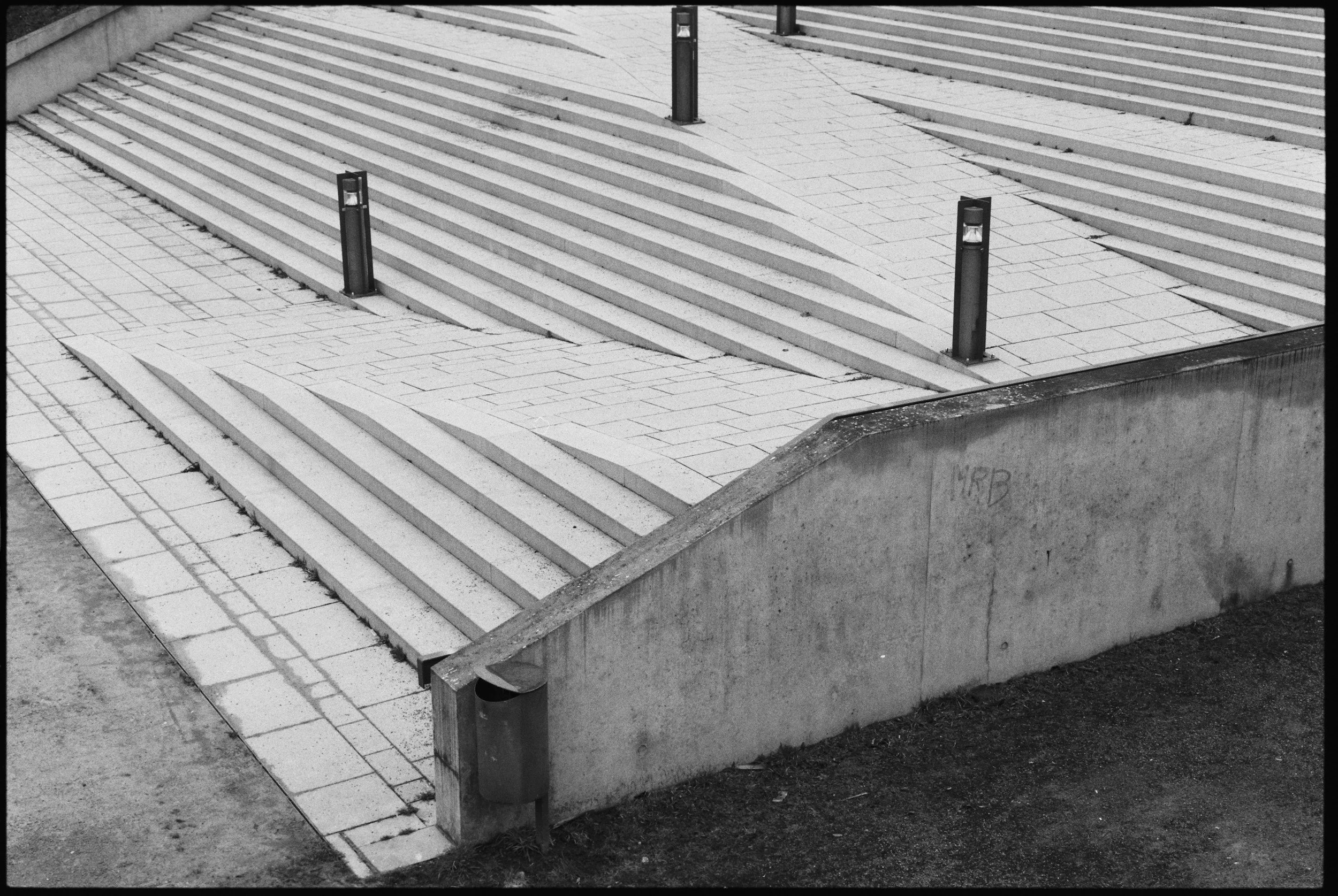
A ramp added at the end announces itself. It runs along the side of the building where there was room left over. It is steeper than it should be, because the level difference was fixed before anyone asked the question. It arrives at a secondary door. Often there is a small sign, and the sign is the confession: step-free access this way.
Nobody set out to build that. It is what happens when access is decided after the geometry is frozen.
I have been in this profession twenty-five years and I have watched it happen more times than I would like to count. So when Lattice asked me about digital accessibility in hybrid and remote work, what I recognised was not a new problem. It was our problem, in a different material.
We are doing it again, in software
The pattern is identical, which is what makes it worth naming.
Access gets treated as a specialist requirement, raised late, by someone with the smallest budget in the room, once the important decisions — the platform, the workflow, the way a meeting is run, what “being present” is taken to mean — have already hardened. Then someone bolts on a provision, and the provision works, more or less, and everyone can tell it was added.
Including the person using it. That is the part that gets left out of the compliance conversation. A late accommodation communicates something even when it functions: you were not in the drawing.
And in the same way a steep side ramp costs more than a gentle one designed in from the start, retrofitted digital access is the expensive kind. Not because access is expensive — because reversing decisions is.
The cheapest decision you will ever make about access is the first one.
The part I don’t think we’ve absorbed
Here is what changes when you take longer lives seriously, and it is the thing I keep pressing on.
We talk about accessibility as a provision for a group. A minority, served properly, as they deserve to be.
But across a working life that now runs sixty years, capacity is not a category. It is a timeline.
The person who needs captions at fifty-eight is the person who wrote the software at thirty-four. The colleague who cannot do four unbroken hours of video is often the one recovering from something, or managing something, or simply further along a road every one of us is on. Hearing changes. Vision changes. Attention changes, permanently, after certain years. Nobody exits a long career with the body they entered it with.
So a workplace designed for a fixed, unchanging capacity is not merely excluding some people now. It is designed to expel its own most experienced staff, slowly, on a schedule.
This is the same argument I make about buildings that must serve an eight-year-old, a thirty-eight-year-old and an eighty-eight-year-old. It transfers exactly. The interface is just made of light instead of concrete.
What I said, and what I meant by it
The line Lattice quoted was this:
Designing for accessibility today means accepting that work is always part of life, and that people move through very different physical, cognitive, and emotional capacities across longer working lives. It’s about intentionally creating conditions for connection and exchange. When workplaces design for those relationships, they build bridges rather than create separation, and they counter much of the isolation many people are still carrying since the pandemic. Accessibility becomes something shared, not exceptional, and one of the quiet reasons people stay, contribute, and keep going over time.
What I meant by shared, not exceptional is narrower than it may sound.
Not that everyone has the same needs — they plainly do not. But that the conditions which make a workplace usable by someone whose capacity is unusual today are, almost without exception, the conditions that make it better for everyone else, and that will make it usable by them later.
Captions help the person in a loud kitchen. A meeting that has an agenda and does not require four hours of continuous video helps the person with a small child, the person in another time zone, and the person who is simply tired. Clear structure helps everybody, and it is indispensable to some.
We learned this once already, in the physical world, and gave it a name: universal design. The lesson did not travel across the medium. It is being relearned now, slowly, in software, at full price.
The stage where it is still cheap
None of this is an argument for better retrofits, and I want to be careful not to be read that way. Retrofits are necessary and I am glad when they happen.
It is an argument about when.
Every question in that Lattice guide — what a platform must do, what a meeting requires of a body, what “available” is taken to mean — is answerable before the thing is built. In my trade that moment has a name in every developed planning system, and in all of them it is the stage most projects skip.
Access decided there is invisible. Access decided afterwards is a sign on a side door.
Read the piece, and continue
The full guide — How to Improve Digital Accessibility in Hybrid Workplaces, by Pratika Mallampalli and Catherine Tansey — is on Lattice, with practical guidance from several people who work on this daily. It is worth your time; it is more concrete than this piece.
If you are shaping a workplace — the digital one, the physical one, or the awkward space between them where most of us now spend the day — and you would rather ask these questions while they are still cheap, I would like to hear about it.
You can write to me. I answer.