Porto Dome
Designing Workplaces for the Full Arc of Life
In my previous essay, Care Is Infrastructure, I explored a simple but far-reaching idea: in a longevity society, care can no longer remain invisible.
Longer lives are transforming how we move through the world. We work longer, care longer, and increasingly navigate professional life alongside the needs of family members across generations.
Yet many of our institutions were designed for a different demographic era.
The workplace is one of them.
For more than a century, workplaces have been built around what might be called the standard worker myth: the imagined employee who is fully available to the labor market, unencumbered by caregiving responsibilities, supported by an invisible domestic infrastructure that absorbs the rhythms of life.
But this model no longer reflects reality.
Today millions of professionals simultaneously support children, aging parents, partners, and relatives who may be living with illness or disability. In the longevity society, caregiving is no longer an exception to working life.
It is part of the full arc of life.
This shift is quietly reshaping the future of work in an aging society.
And it raises a fundamental design question:
How can workplaces support contribution, care, and human connection across a 100-year life?
If care is infrastructure, then the places where we work must eventually reflect it.
Porto Dome emerged from that question.
A Workplace Designed for the Longevity Society
Porto Dome explores what happens when workplaces are designed for the full arc of life.
It investigates how architecture, organizations, and communities might create environments where work, childcare, elder care, and intergenerational life coexist. In these spaces, care is not hidden from professional life but recognized as part of the social infrastructure that sustains it.
Porto Dome is therefore not simply a building project. It is an exploration of how workplaces might evolve in the longevity society.
For the first time in history, four or even five generations may coexist within the same organizations and communities. At the same time, the demographic expansion of the care economy means that millions of professionals now navigate caregiving responsibilities alongside their careers.
Despite these shifts, the design of workplaces remains largely unchanged.
Care is still treated as something that happens outside professional life managed privately, often invisibly.
Yet the realities of longer lives suggest a different direction
The Full Arc of Life Workplace
One way to understand the transformation ahead is through a simple concept: the full arc of life workplace.
Most workplaces today were designed for a narrow phase of life, the years of peak professional productivity. Childhood, caregiving, and aging were assumed to happen elsewhere.
But longer lives stretch the timeline of human experience.
People move in and out of caregiving roles. Careers extend across decades. Generations overlap in ways that earlier systems never anticipated.
A full arc of life workplace recognizes that contribution, caregiving, learning, and belonging often occur simultaneously.
Designing such workplaces requires more than policy adjustments. It requires rethinking how space, culture, and time interact inside organizations.
Workplaces must begin to function as intergenerational infrastructure environments where professional life remains compatible with caregiving realities and where different generations remain visible to one another.
Hybrid Spaces of Work and Care

Porto Dome explores how workplaces might evolve into hybrid spaces of care.
Rather than separating work from the rest of life, these environments allow different dimensions of human experience to intersect:
Work
Childcare
Elder care
Community life
When these activities coexist within shared environments, something important happens.
Children encounter adults engaged in meaningful work.
Professionals integrate caregiving into daily rhythms rather than hiding it.
Older adults — including people living with dementia — remain visible within the social fabric rather than disappearing behind institutional walls.
Care begins to circulate within the environment.
Not as a disruption to productivity, but as part of the invisible infrastructure that sustains society.
The Architecture of Encounter
Architecture quietly shapes the encounters that structure everyday life.
A corridor isolates.
A courtyard invites conversation.
A shared garden creates moments of pause.
Historically, intergenerational life emerged naturally in extended households and neighborhoods where different ages shared space.
Modern urban planning, however, often divided life into specialized zones schools, offices, hospitals, care institutions, each optimized for efficiency.
Yet the unintended result has been age segregation.
Porto Dome experiments with another spatial logic: a workplace embedded within an intergenerational ecosystem, where learning, caregiving, and professional life intersect.
Where encounters between generations become part of daily rhythms rather than exceptional events.
Care Identity in the Workplace
When care becomes visible within shared environments, something else begins to shift.
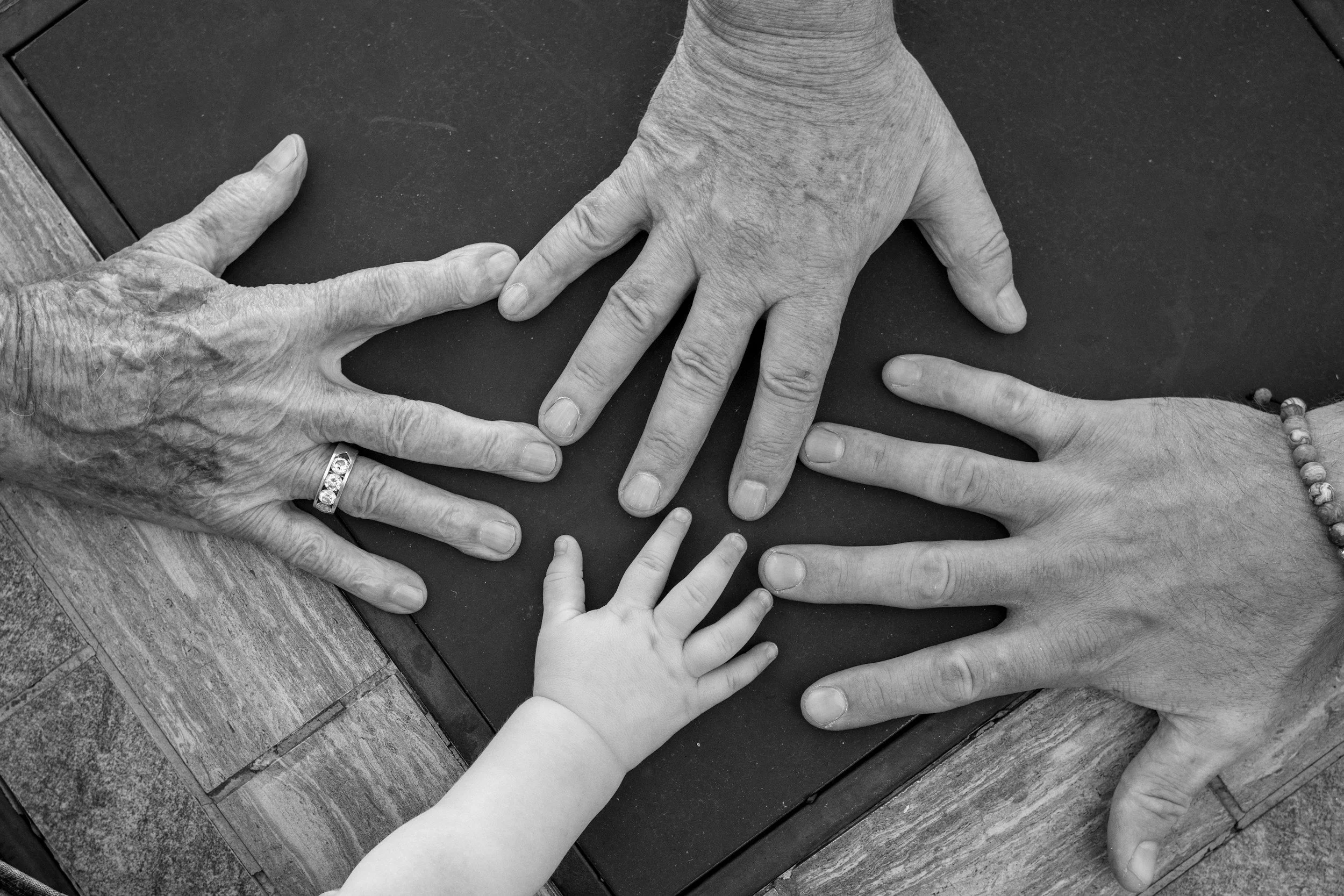
People rediscover their care identity.
Care is no longer treated solely as a private responsibility carried quietly by individuals, historically, and disproportionately, by women.
Instead it becomes recognized as a dimension of collective life.
Organizations benefit as well.
Workplaces that acknowledge caregiving realities foster trust, long-term participation in the workforce, and deeper organizational resilience.
In the longevity society, supporting the full arc of life is not only an ethical imperative.
It is also a strategic advantage.
Porto Dome: A Prototype
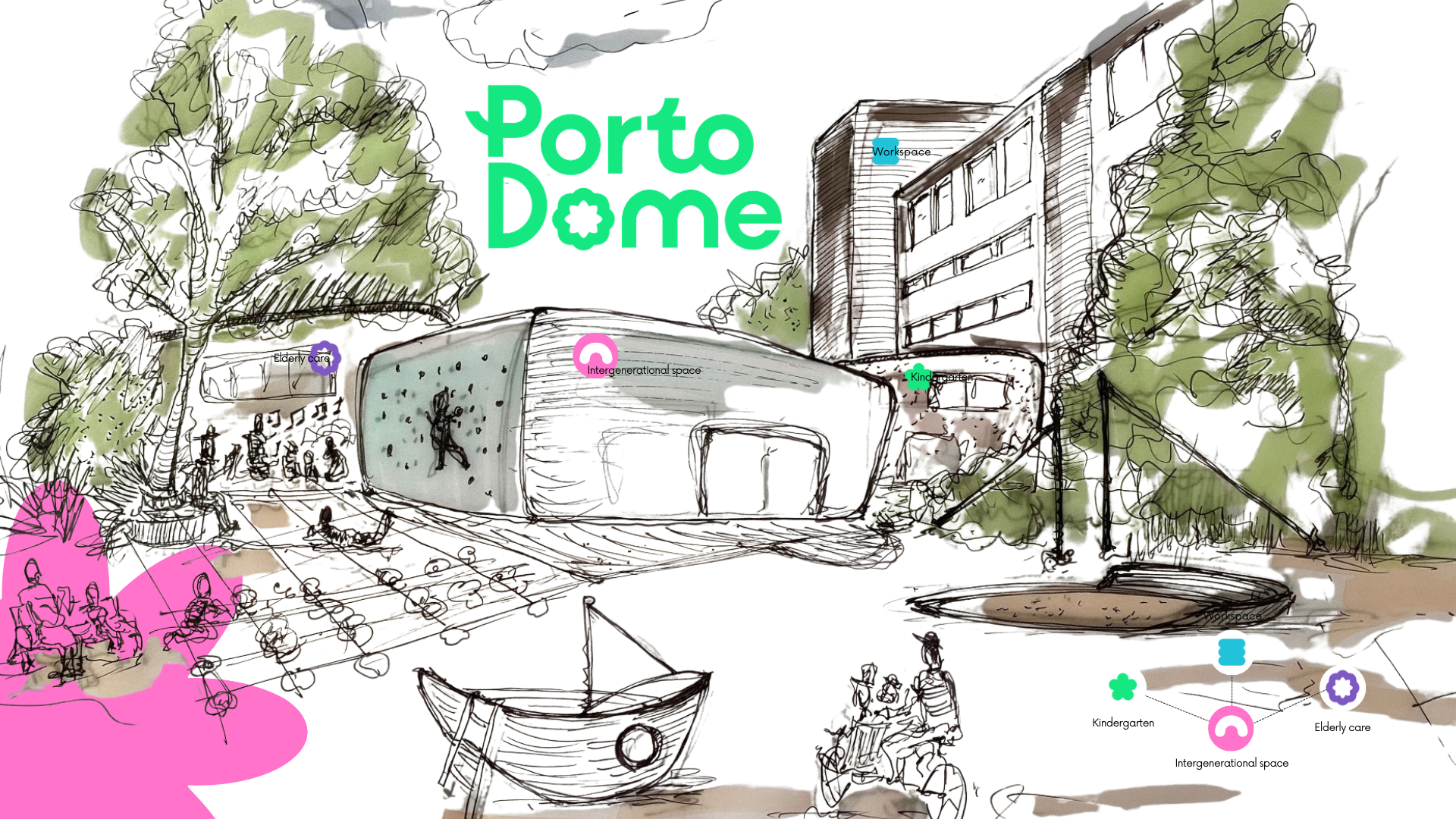
Porto Dome explores what workplaces designed for the longevity society might look like.
A space where architecture, organizations, and communities collaborate to support intergenerational life.
Where work environments recognize that human lives unfold across decades, not narrow career phases.
And where care is treated not as a hidden burden but as essential social infrastructure.
Porto Dome is a prototype.
An invitation to rethink how workplaces, cities, and communities might evolve in a world where longevity is no longer an exception but a shared human horizon.
Invitation
Designing workplaces for the longevity society will require collaboration between companies, cities, developers, and care innovators.
Through Porto Dome, we are beginning to explore the first pilots of workplaces designed for the full arc of life — environments where work, childcare, elder care, and intergenerational life coexist.
We are now inviting a small group of pioneering partners interested in shaping this next generation of workplaces.
If your organization is exploring the future of work, the care economy, or intergenerational design, I would welcome the conversation.