Put On Your Armour
Caracas, 1999. Thirteen public hospitals, one professor, and the sentence I have been arguing with ever since.
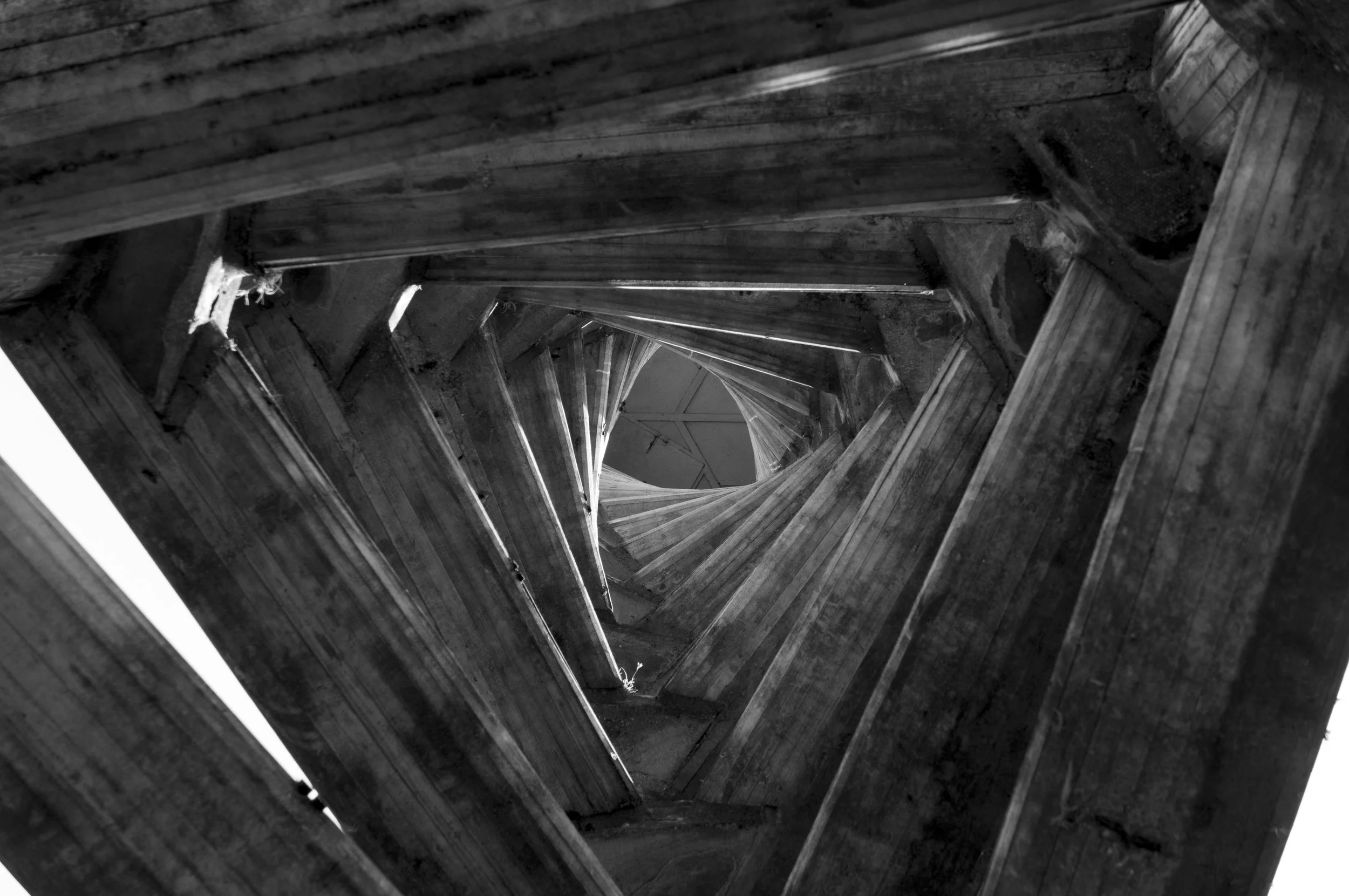
@danielito311 - Reloj Universitario UCV, Caracas
We were in the car when he said it.
Eduardo Fernando Guillén, my professor at the Facultad de Arquitectura y Urbanismo, later my first employer, a man who taught urban planning the way other people talk about football. We were on our way to the first of thirteen.
Thirteen public hospitals of Caracas. That was the commission: survey the architectural condition of all of them, for the health authority of the Distrito Federal, and report what would have to change. Julio Criollo Rivas. J. M. de los Ríos. Concepción Palacios. Vargas. Thirteen buildings, thousands of beds, a whole city’s idea of what it owed the sick.
I was twenty-something and I had my notebook and I was delighted with myself.
Guillén said: ponte la armadura.
Put on your armour.
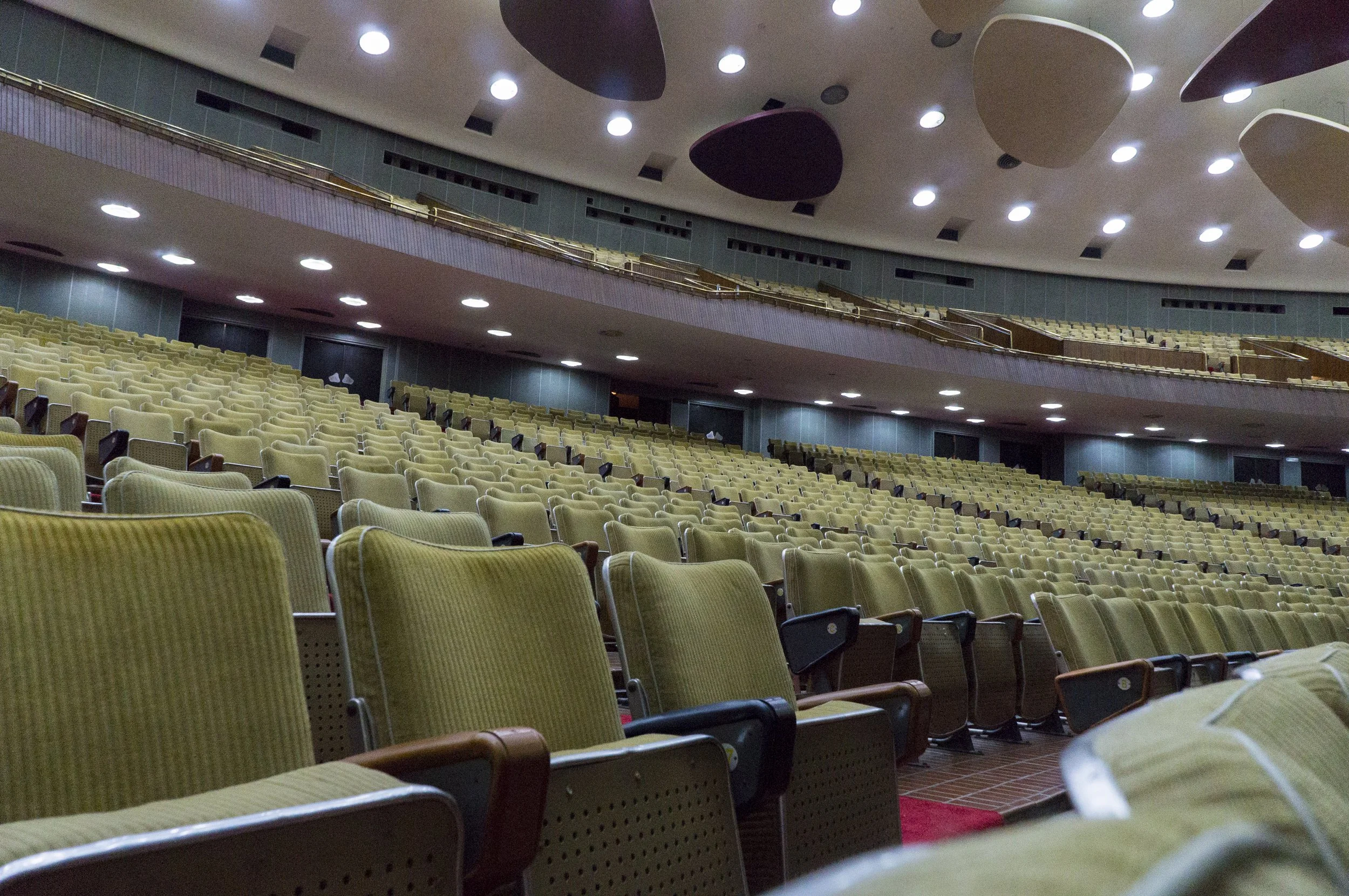
@danielito311 Aula Magna, Nubes de Calder UCV
Where I learned that architecture was a social act
You have to understand where I had spent the previous five years.
I studied at the Universidad Central de Venezuela, which means I studied inside the Ciudad Universitaria de Caracas. Carlos Raúl Villanueva’s campus. It is now a UNESCO World Heritage site, and it deserves to be.
If you have not been: covered walkways that move you through a tropical city without ever putting you in the sun or the rain. Concrete that knows exactly what light does at that latitude. Painted surfaces by Léger, by Vasarely, by Arp, not hung on the walls but built into them. And in the Aula Magna, floating above your head, Alexander Calder’s Nubes Acústicas, thirty-one clouds that are simultaneously sculpture and acoustic engineering, so that the room sounds the way it looks.
Calder and Villanueva argued about them for months. Calder ended up calling him el diablo.
That is where I was a student. Not in a lecture hall about social architecture. Inside the argument itself, walking through it five days a week, taking it entirely for granted the way you take your own city for granted.
Villanueva wrote, in 1967:
La Arquitectura es acto social por excelencia, arte utilitario, como proyección de la vida misma, ligada a problemas económicos y sociales y no únicamente a normas estéticas. Para ella, la forma no es lo más importante: su principal misión: resolver hechos humanos.
Architecture is a social act above all. A utilitarian art. A projection of life itself, bound to economic and social problems and not only to aesthetic norms. For architecture, form is not the most important thing. Its principal mission is to resolve hechos humanos.
That doctrine was in the walls of that school. Nobody had to teach it to us as a subject. We were inside it.
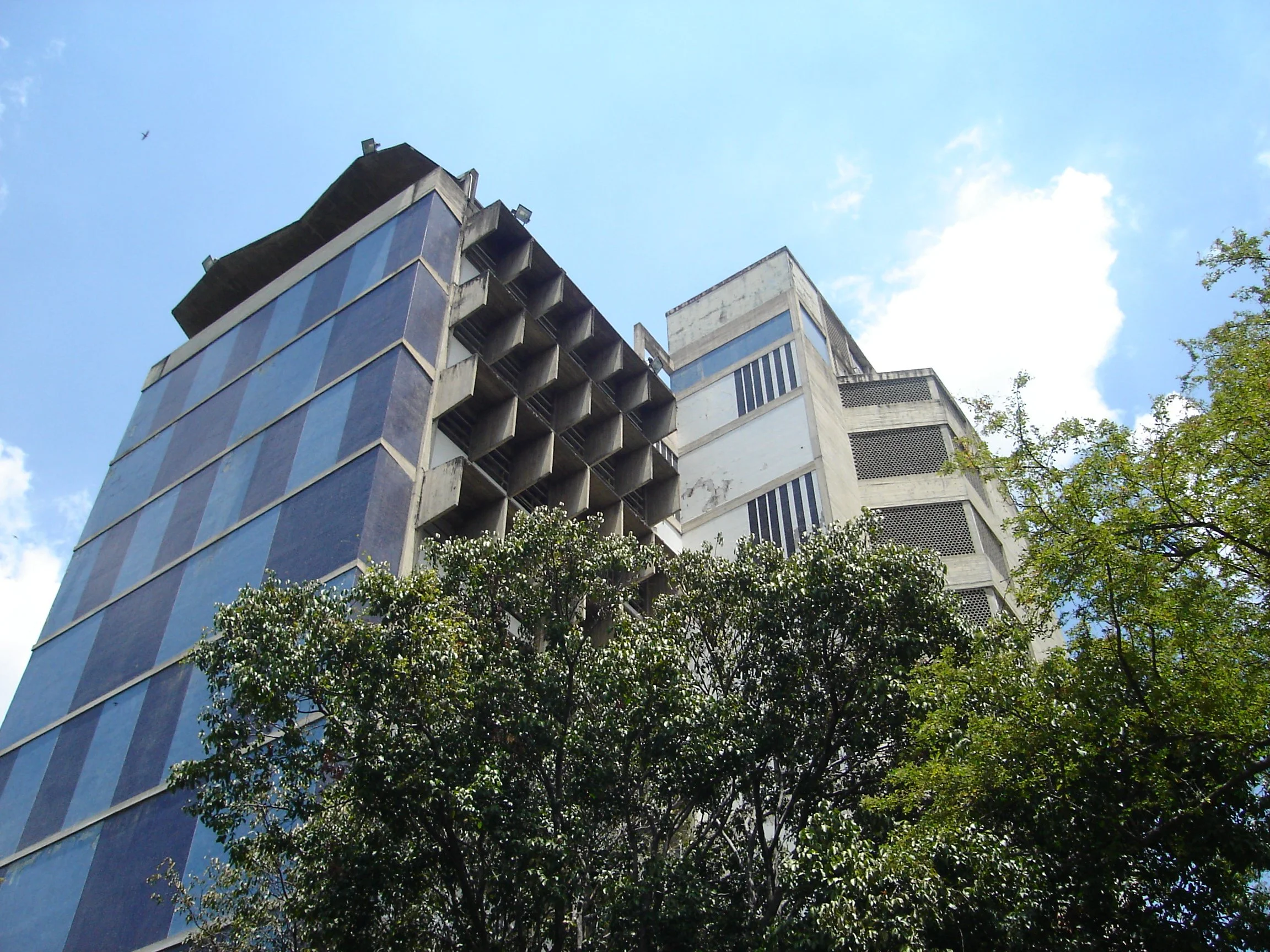
Photo by Architect Kathleen Cerrada • Facultad de Arquitectura UCV
And then we drove to the hospitals
I will not catalogue the thirteen. Some were doing extraordinary work with almost nothing, and nobody inside them needs an architect’s pity thirty years later.
What I did not expect, and what nobody had prepared me for, is how much of that work was people.
You go in with a brief about ventilation and circulation and bed counts, and what you actually walk into is a corridor full of families. A woman who has been holding a plastic bag on her lap since six in the morning. A man explaining his mother’s situation for the fourth time, patiently, to a fourth desk. Children asleep across two chairs because there is nowhere else. Nurses who know every one of them by name and have no room to put any of them in.
That survey took more than a year. In it I was let into more lives than in the five years of my degree.
That is the part I would not give back. The campus gave me the conviction that architecture is a social act. The hospitals gave me the evidence, and the evidence was not the buildings. It was the number of hours a human being will sit in a bad corridor for someone they love, and how completely the building had failed to notice that this was the main thing happening inside it.
The distance between the campus where I studied and the buildings where I spent 1999 was not a distance of talent, or of care, or of conviction. Everyone involved cared, including the ones with nothing to work with. The distance was of another kind entirely, and it took me most of the years since to be able to name it.
At the time all I had was the notebook and the armour.
What the armour actually was
Here is what I have decided Guillén meant, and I have had a long time to think about it.
He was not telling me to stop feeling. He was not one of those men, and anyway it would not have worked.
He was telling me that in about forty minutes I was going to feel something very strong, and that the feeling would be no use whatsoever to the building or to anybody in it, and that my job that day was to measure corridors, photograph ventilation, count beds, and write down what I saw with enough precision that somebody could act on it later. The armour was so I could stay in the room and keep working.
That is a real professional virtue. I have used it since, in every difficult building I have walked into, including, twenty years later, the care homes in Italy where my own father was living with dementia. The armour is why I could look at those and take notes instead of leaving.
And it is a trap. I want to be exact about why.
Armour lets a profession survive the sight of its own failures. Survival is not change. You can put it on every morning for a whole career, do excellent work, write honest reports, and retire having personally witnessed more damage than any layperson will see in a lifetime, without the system that produced the damage having shifted by a millimetre.
The armour protected me. It protected nobody in those hospitals.
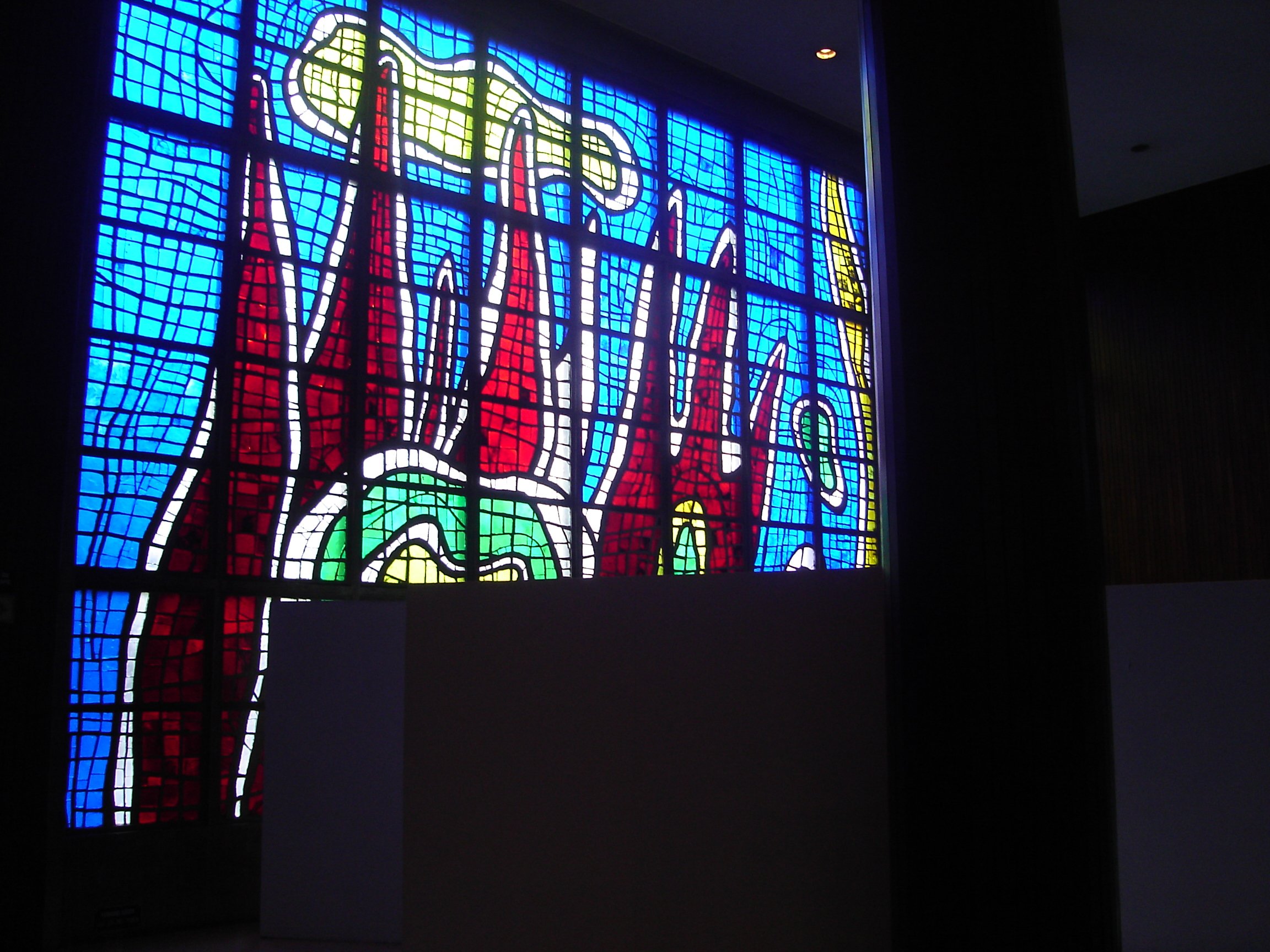
Photo by Architect Kathleen Cerrada • Biblioteca Central UCV
“But you are an architect”
There was a second thing Guillén gave me, and it took me much longer to understand what it was for. He said it more than once, in the years I worked for him, in the way people repeat the things they actually believe.
An architect is a director de orquesta. A conductor.
Not the first violin. The conductor plays nothing.
What a conductor has to know is the orchestra, and on a real building the orchestra is this. The client, who is a completely different instrument depending on whether they are public or private, and who has to be read differently in each case. Structure. Cost, which is two instruments and not one, because the money inside the contract and the money inside the project do not behave the same way and confusing them is how projects die. The subcontractors, and the managing of them, which is its own art and is mostly conducted by telephone. The research, which somebody has to actually do. And aesthetics, which comes last on that list and is the only part anyone outside the profession believes the job consists of.
Then the people. Engineers, surveyors, acousticians. Sociologists and anthropologists, whom my profession has been slow to invite and who know things about how a room is used that no engineer can tell you. On the hospital survey it was doctors, nurses, administrators and the women who cleaned the wards, and every one of them knew something about that building that no drawing contained.
You never have to play any of them. You have to know each one well enough to write the score, and to hear immediately when something is wrong.
Villanueva understood this better than anyone in my tradition. He spent months arguing with Alexander Calder about thirty-one clouds, and what came out of the argument was a room that sounds the way it looks. That is not a client managing a supplier. That is a conductor and a soloist disagreeing until the piece is right, and it is why Calder called him el diablo rather than something politer.
I have been handed “but you are an architect” as an objection many times. Politely, usually, and usually by someone who means: why are you talking about care regulation, or workforce data, or what a nursery actually needs at eleven in the morning.
Yes. Exactly. That is the job.
An architect who does not know what a licensing threshold does to a floor plate is not being pure. She is being under-informed, and the building will show it in about four years, quietly, in ways nobody will trace back to a drawing.
And there is one more thing in that metaphor that took me the longest to accept. A conductor produces no sound at all. Everything you hear is made by someone else.
That is not a small role. It is the one that decides whether a room ends up with music or with noise.
What I want instead of armour
Villanueva’s line has been sitting in my head for more than twenty-five years and I think I have only recently understood what it costs.
Its principal mission is to resolve human facts.
Not to express them. Not to feel appropriately about them. Resolve. That is an engineering verb, and he chose it on purpose.
So here is the thing I would say back to my professor, in the car, if I could.
The instrument that resolves human facts at scale is not talent, and it is not conscience. It is what gets written down before anyone starts drawing. There is a rule that requires the door to lock. There is no rule that requires a view, a garden, or a child passing by. We have made isolation a compliance matter and connection a matter of taste, and no amount of armour on any individual architect fixes that, because the armour was never the point of leverage.
Villanueva knew this, which is why he did not only build. He wrote, he taught, he sat on committees, he fought about clouds with Alexander Calder for months. He said once that he felt almost more satisfied with his teaching than with his built work, because the young architects trained in the country had almost all been his spiritual children.
That doctrine reached me through a school, and then through a man in a car, and now it is being argued about in Berlin by someone who was not born when he wrote it.
I do not want better armour. I want the thing that would have made the armour unnecessary.
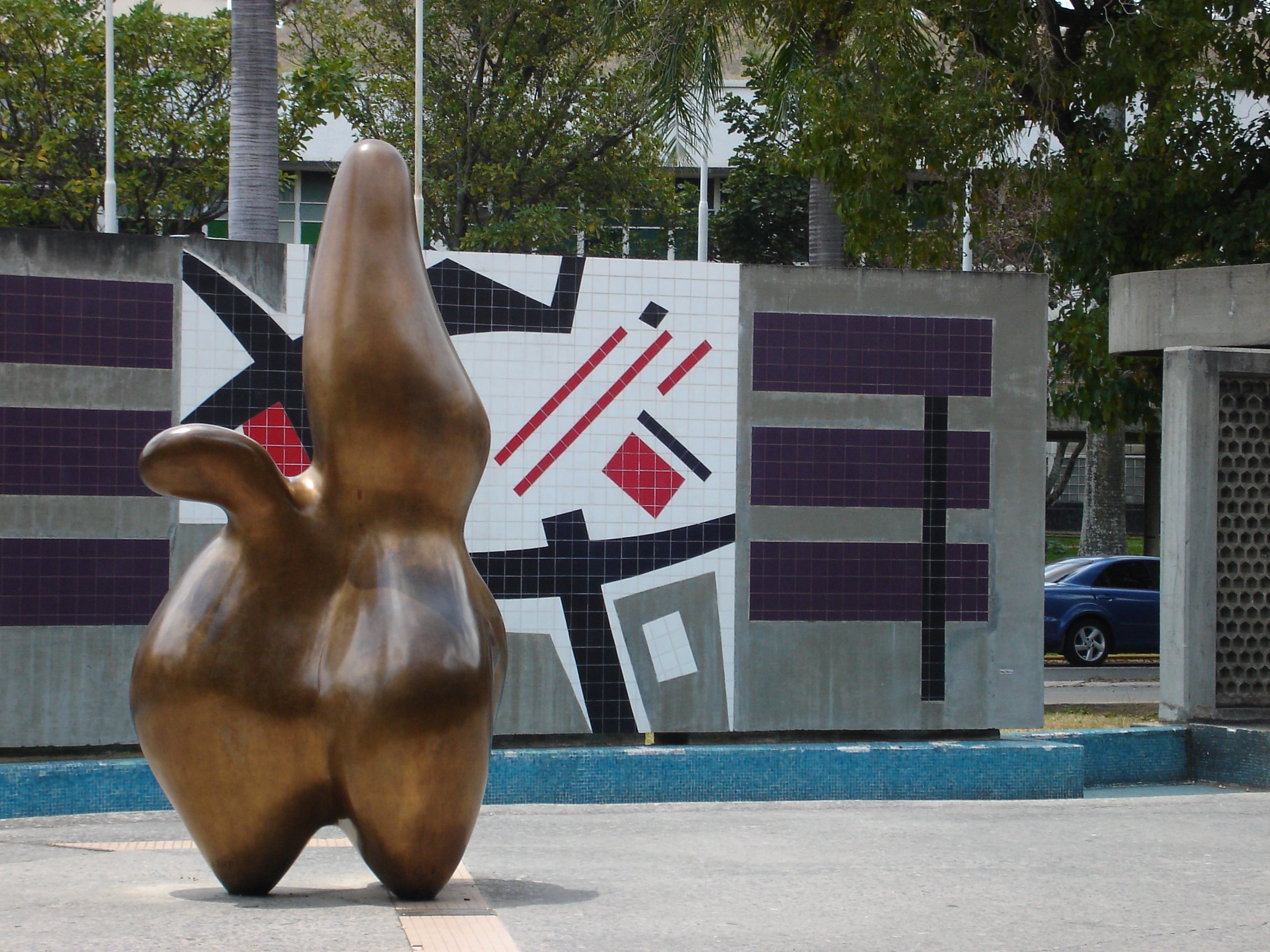
Photo by Architect Kathleen Cerrada • Pastor de Nubes Jean Arp UCV
A note about the man in the car
Eduardo is still in my life. Not nearby. There are about eight thousand kilometres and a great deal of history between the room where he taught me and the desk where I am writing this, and we manage anyway.
I will send him this piece. He will agree with the first half and argue with the second, which is the correct behaviour for a professor and one of the reasons he was a good one.
He was also an extraordinary boss, and not in the way that phrase usually means. Not the kind who hands a twenty-something the survey of thirteen hospitals and steps back to see what happens. The kind who takes her with him. I walked those wards at his side. I sat in the meetings with the engineers. I was in the room in front of the clients. And he put two colleagues under me and let me run them, at an age when nobody had any particular reason to trust me with that.
Which is, I realise only now, how you actually learn an orchestra. Not from a description of the instruments. From being walked through the room while they are playing.
Some people teach you a subject. A smaller number hand you the thing you will still be arguing with at fifty. He gave me a sentence in a car and it has outlasted every technical thing I learned that year.
If you are building something where these decisions are about to be made, and you would rather make them before the drawings than apologise for them afterwards, I would like to hear about it. You can write to me. I answer.