Care Is Infrastructure
Designing an Intergenerational Longevity Society
In an age of astonishing longevity, we often mistake survival for progress. We extend life but not connection, build systems of care without the cultures to sustain them. Longevity, celebrated as a triumph of modern medicine, risks becoming a quiet crisis of isolation unless we learn to live – and design – together again.
Caring for my father, who lived with dementia, taught me that systems often fail out of narrowness.
We went through eight caregivers in a year. I travelled to Italy every three weeks. The situation had become unsustainable. Home care, which at first seemed like the most loving option, turned into a race against emotional and physical burnout. In January 2019, we decided to start visiting nursing homes in northern Italy. Not an easy step. I remember the drive to the first one perfectly. We were surrounded by the spectacular hills of the Prosecco Valley. The landscape was almost cinematic. I thought: What a beautiful place to be. But the other side of that beauty was appalling isolation.
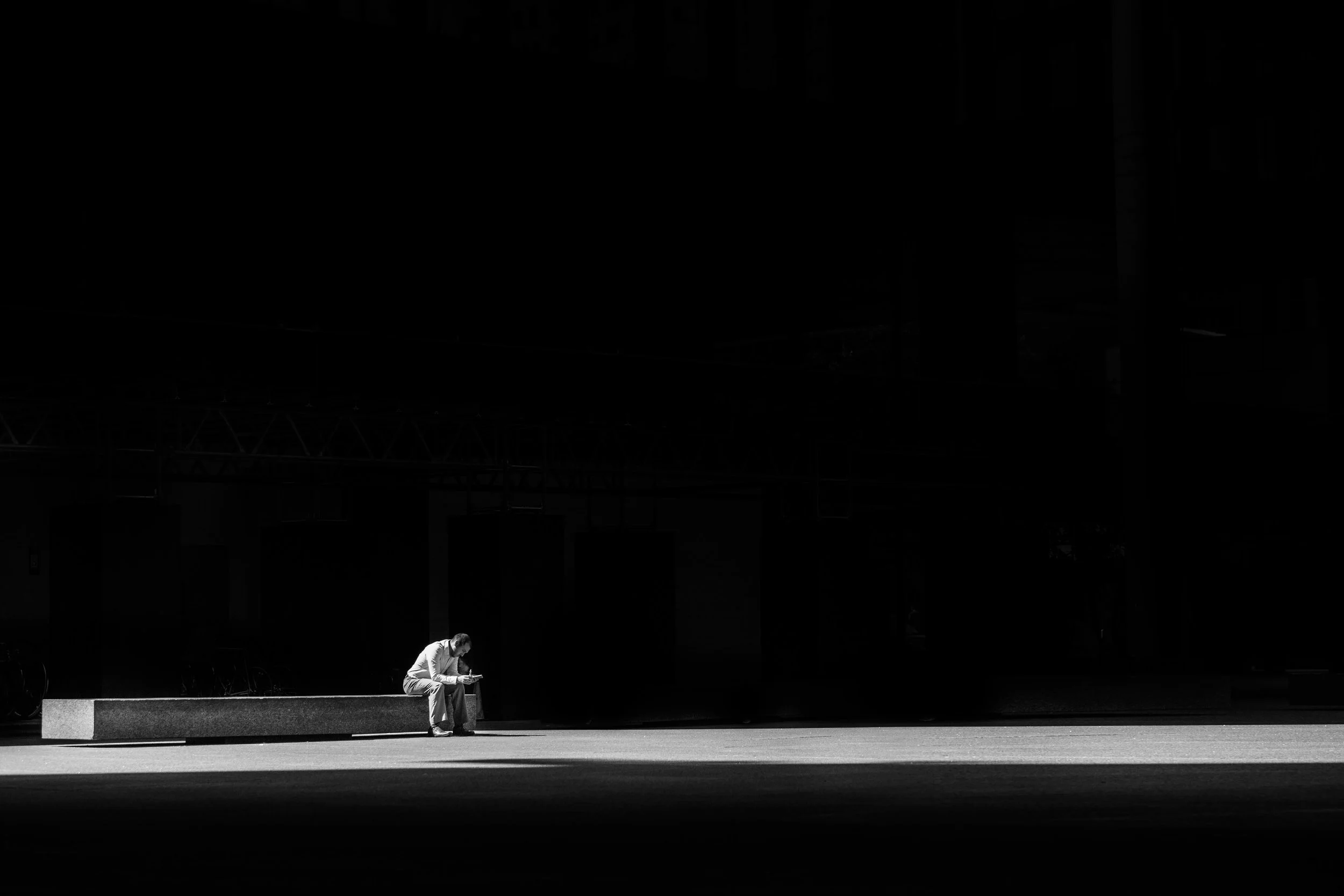
The centre was completely cut off from everyday life. There were no cafes nearby. No children playing in the square. No foot traffic. Just nature and silence. When we entered the ward for people living with dementia, I felt a punch in the stomach. An immediate shock. I looked at my brother and said: “This is worse than prison.”
It was an impulsive statement, but it came from somewhere deep inside. In prison, at least, there is the possibility of going out into the yard, looking at the sky, enjoying a small bite of everyday freedom. In many of these units, dementia patients never leave the floor. They pay high sums to live in spaces that feel utterly clinical. A permanent hospital environment to live in.
No one wants to spend their final years in an environment like this. No one wants to stop being part of society in the name of a systemic, senseless alienation. We are all likely future caregivers and future care recipients. Whether we like it or not. It is a demographic reality.
When I visited that facility and took in the spotless corridors, the geometric lighting, the surgical air-conditioning, I understood at once that something essential was missing. That something, I came to realize, was systemic reciprocity in care.
The Isolation Built Into Modern Care Systems
The first time the word systemic truly unsettled me was during my certification in intergenerational practices. I am an architect by training, Venezuelan by history, Italian by descent, and incurably curious by nature. I have always loved connecting ideas, provoking questions, tracing lines between things that others perceive as separate. But it was my father’s dementia that forced those lines to become urgent.
Until then, my professional world had been structured, literally architectural, defined by projects and sites. Care was something intimate, familial. When my father began living with dementia, the geography of my life changed. I found myself speaking not only with doctors, but with sociologists, anthropologists, gerontologists, mental health professionals, caregivers, directors of care centres, cleaning staff in those institutions. I reached out across the Venezuelan diaspora, asking friends in Uruguay, the United States, Japan, Denmark, Singapore, Italy, Spain, Australia, Israel, Canada, Mexico.
I began to see a pattern.
Many elder care facilities are placed at the margins of cities, physically removed from the rhythms of daily life. They are organized to manage needs efficiently, but in doing so they often withdraw older adults from the social fabric. The system, in trying to solve a problem, reorganizes space in a way that isolates those it intends to support.
This is where I began to question what we mean by a systemic approach.
In its narrow sense, “systemic” often means designing a structured response to a defined issue. We identify a population, “the elderly”, and we build specialized spaces, services, and policies around them. But this approach, while systemic in organization, may be fragmentary in spirit. It treats aging as a separate domain, rather than as a dimension of collective life.
A truly systemic approach, as I have come to understand it, begins elsewhere. It asks: How do the arrangements of space, time, relationships, and institutions affect one another? How does the location of a care centre influence the possibility of encounter? How does urban planning shape loneliness? How does the absence of children’s laughter shape cognitive decline? A systemic view recognizes that one change reverberates across the whole. Nothing stands alone.
This realization became embodied for me in a moment.
My father was already living in a care home. There were days when he remained almost entirely within his private world. One afternoon we were sitting quietly on a bench facing the garden. He seemed distant, unreachable. Then my niece ran into the garden and climbed onto a swing. In a fleeting instant, their eyes met. Something passed between them, an exchanged gaze that unfolded into a shared, complicit smile. It was brief. But it was unmistakable.
In that moment, I witnessed care flowing.
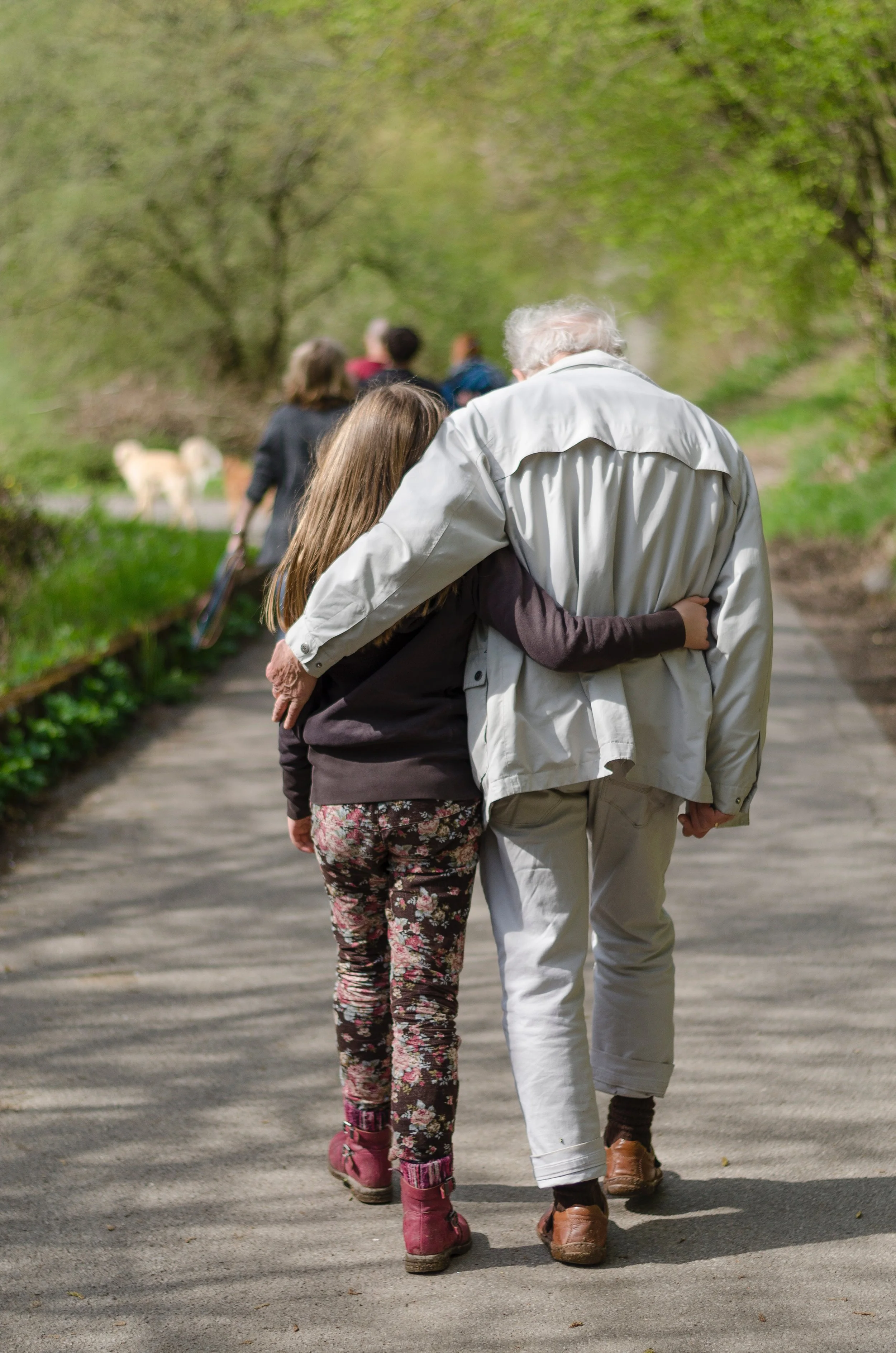
Not in the conventional direction, from the younger to the older, from the “healthy” to the “ill,” from the caregiver to the dependent – but reciprocally. My niece did not “provide therapy.” She simply existed in her vitality. My father, in his smile, offered recognition, presence, relational affirmation. Something moved between them that neither policy nor protocol could manufacture.
Care, then, is relational energy. It flows when systems allow encounters to occur.
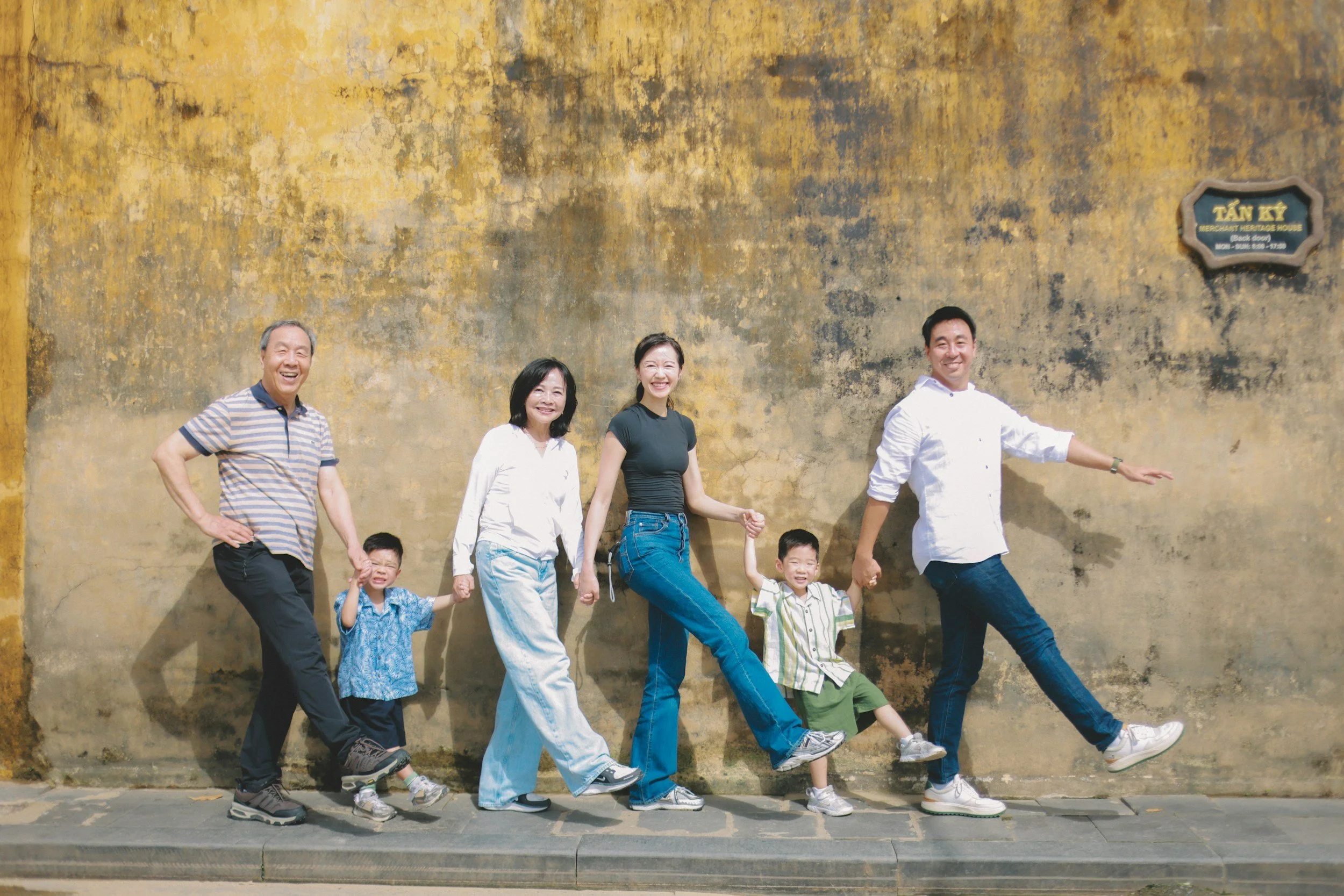
In my Italian-Venezuelan upbringing, sitting at a table with five generations felt natural. Seeing a ninety-year-old uncle beside his three-year-old great-grandchild was ordinary life. Yet I came to realize that this intergenerational texture is no longer common in many societies. Our systems segment by age: schools for children, offices for adults, institutions for elders. Each space optimized for function, yet impoverished in relational diversity.
If we take “systemic” seriously, we must move beyond organizing care for the elderly as a separate category. We must redesign social life so that different generations share space, visibility, and time. It means situating it within the living tissue of community. A true systemic approach interrogates the arrangements that have made isolation seem normal. It recognizes that, when one part of the system is placed at the margins, the whole is diminished.
Rebuilding Connection Through Intergenerational Life
We have built a culture of age segregation so deep that it feels invisible. When we separate life by generation, we lose continuity, memory, and empathy. The WHO reportwarns that this fragmentation erodes social trust and undermines well-being across all ages. Social segmentation weakens the relational fabric that sustains communities. When generations are separated into specialized institutions and age-defined spaces, the everyday encounters that nurture empathy and shared meaning gradually disappear.
Children grow up without sustained contact with older adults who embody patience, memory, and long-view perspective. The absence of these relationships limits their opportunities to learn attentiveness, emotional regulation, and respect for life’s slower rhythms. Developmental research increasingly shows that intergenerational contact fosters empathy, social skills, and a deeper sense of belonging within a broader human continuum.
Older adults, in turn, are deprived of regular interaction with younger generations whose vitality and spontaneity can stimulate cognitive engagement and emotional responsiveness. Studies on intergenerational practice indicate improvements in mood, reduced loneliness, and even measurable gains in physical and cognitive activation among older participants.
Intergenerational practice has been defined as bringing people together in purposeful and mutually beneficial activities that promote understanding and respect between generations, thereby contributing to more cohesive communities. Its emphasis is not merely on coexistence, but on reciprocity. Younger and older people are recognized as holders of resources skills, narratives, energy, experience that circulate within a shared ecosystem.
This perspective reminds us that human beings evolved as social mammals embedded in multi-generational groups. Historically, daily life unfolded in extended relational networks. The increasing structural isolation of age groups represents a relatively recent social development, one that may unintentionally undermine collective resilience.
The big advantage of intergenerational models, therefore, lies in strengthening the entire social ecosystem. They cultivate social capital, reinforce community cohesion, and reestablish patterns of mutual visibility and shared responsibility. When generations are reconnected through intentional practice, care becomes relational rather than transactional, and social well-being becomes a shared outcome rather than an individual burden
Care as Social Infrastructure

In The Human Condition (1958), Hannah Arendt describes the public realm as the space where we take political action and fulfil our highest ambitions, whereas the private realm is home to lower, biological necessities. That’s where care takes place, historically performed by women – as empirical data show.
What would happen if we stopped understanding care as a private, domestic-like
responsibility and began to think of it as a visible, public good? Not only as a service that can be purchased or delegated, but as a constitutive social practice. Care is, and should be seen as, a key aspect of belonging to any social structure. Care can no longer be treated as a “given right” that one part of society – historically women – must silently provide to the rest. Nor can it be reduced to a market transaction that outsources collective responsibility.
If modernity confines our most generous sentiments to the private domain, and delegates public responsibility to specialized systems oriented primarily by efficiency, care cements itself as something delivered by professionals rather than collectively sustained. Care is much more than a sector. We have mistaken so far specialized care for collective compassion.
The big question is how to organize our institutions, our cities, and our cultures to sustain interdependence in an aging society. My deep conviction is that an all-encompassing strategy is needed, which embraces workplaces, housing and community centres. Workplaces with intergenerational mentorship and caregiving leave as norms, housing that favours shared courtyards between elders and children, community centres where storytelling is everyday practice, thus facilitating an intergenerational dialogue. Thanks to this combined strategy we can honour reciprocity by making it visible and effective on a social level. And some institutions are already implementing it.
The work carried out by sociologists such as Prof. Kaplan and Prof. Sánchez among others is deeply revealing. It opened a new world to me. Decades of research have been devoted to understanding society not as a set of separate age groups, but as a dynamic intergenerational network. Achievements such as the Intergenerational Contact Zones show that it is indeed possible to design social structures that recognize interdependence between generations as an organizing principle.
Today we are experiencing an unprecedented historical situation. For the first time, in many work contexts, up to four or five generations coexist in the same workspace. However, coexistence does not guarantee connection. A multigenerational environment is not necessarily an intergenerational environment. The difference is crucial. A multigenerational space simply brings together different ages. An intergenerational space, on the other hand, creates conditions for meaningful exchange, mutual learning, and bond building. It involves intention, design, and an organizational culture oriented toward dialogue.
In this sense, intergenerational spaces are a real utopia. What they require is visibility and expansion. These environments generate multiple benefits. They foster reciprocal mentoring, strengthen social cohesion, reduce generational prejudices, and stimulate innovation from diverse perspectives. They are places of emotional well-being, sustainable productivity and organizational resilience.
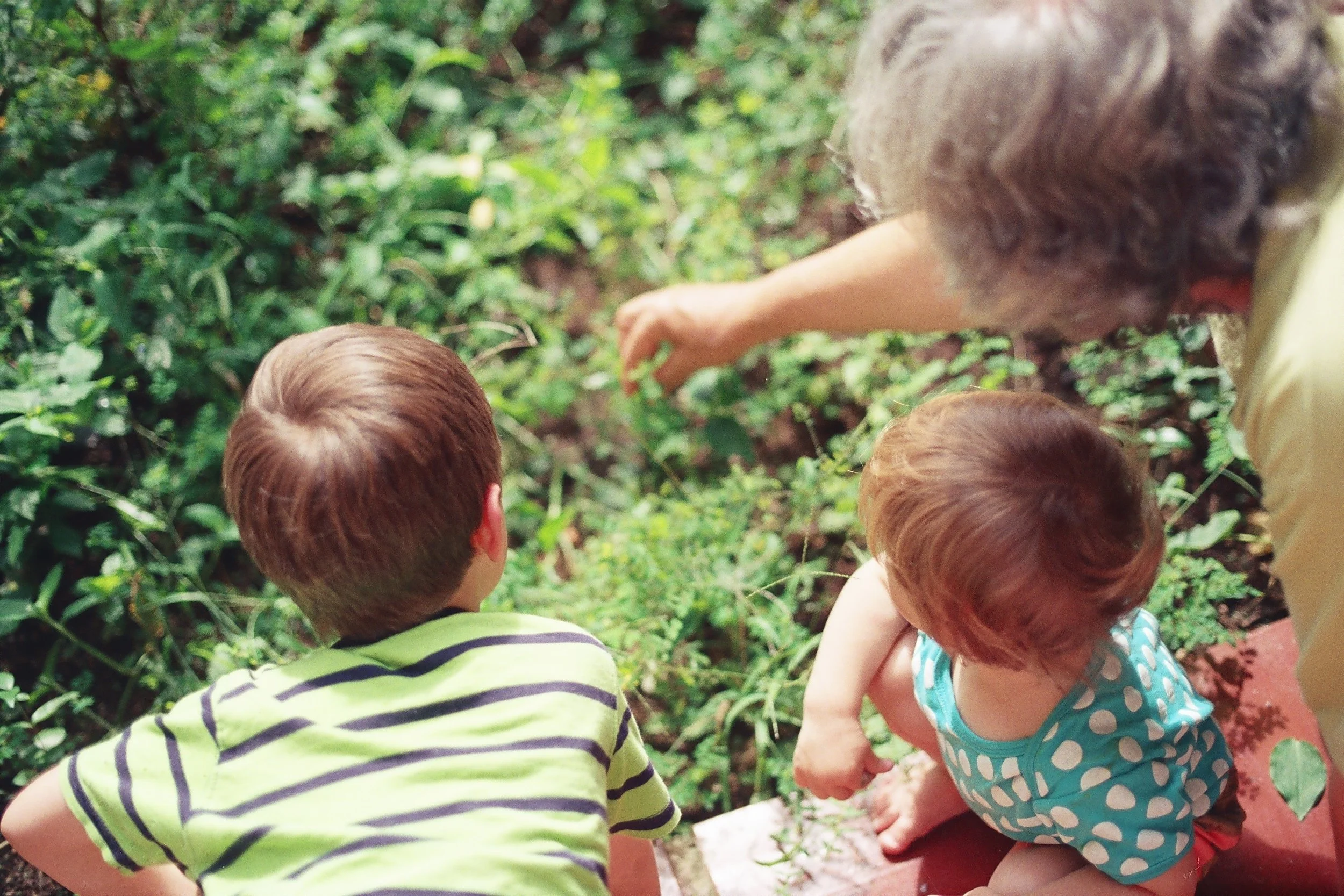
Care Gives Meaning to a Long Life
Once I was applying for funding. I had to talk about impact. I had to explain the scope, the numbers, the structure of my project. But I also needed some heartfelt words to sum up what I meant. So I said to my godmother, a psychologist, almost desperately: “I need one of your magic phrases.” She looked at me with that typical mixture of patience and complicity. “I’ll tell you something tonight.” And she did. That night she gave me a few well-known lines attributed to Rabindranath Tagore, which have guided me ever since:
“I slept and dreamt that life was joy.
I awoke and saw that life was service.
I acted and behold, service was joy.”
For me, this dreaming, awaking and acting come together in the beautiful agency of serving those in need. My godmother was not only an extraordinary woman with a huge heart and keen perception. She was a humanist, a university professor. But the most important thing was how she lived. She embodied service. “Compassion, Marisa. Compassion”. That was her essential teaching.
I miss her. She left three years ago. And still, when I envisage new intergenerational spaces which need a voice, a vehicle for them to become a mainstream reality, I wait for a phrase of hers to kiss me on the forehead, like a Muse.